


Arona Maskil told me about a client whose chatbot could answer in 27 languages. Despite this, she recalled the client saying it still had not figured out “how to give feedback to our team in India without causing offense.” It captures a gap I suspect many of us have fallen into: translating a message is not the same as understanding how it will land.
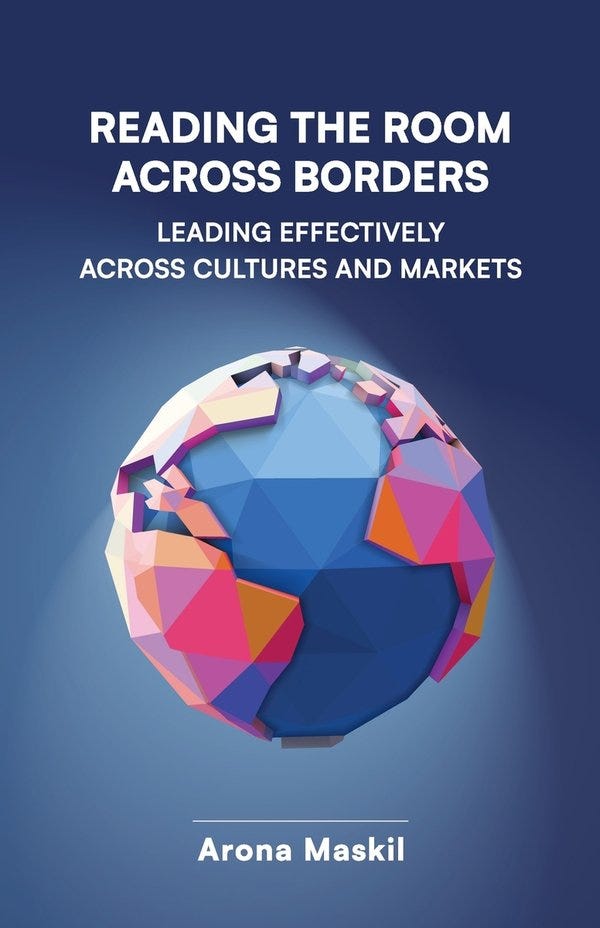
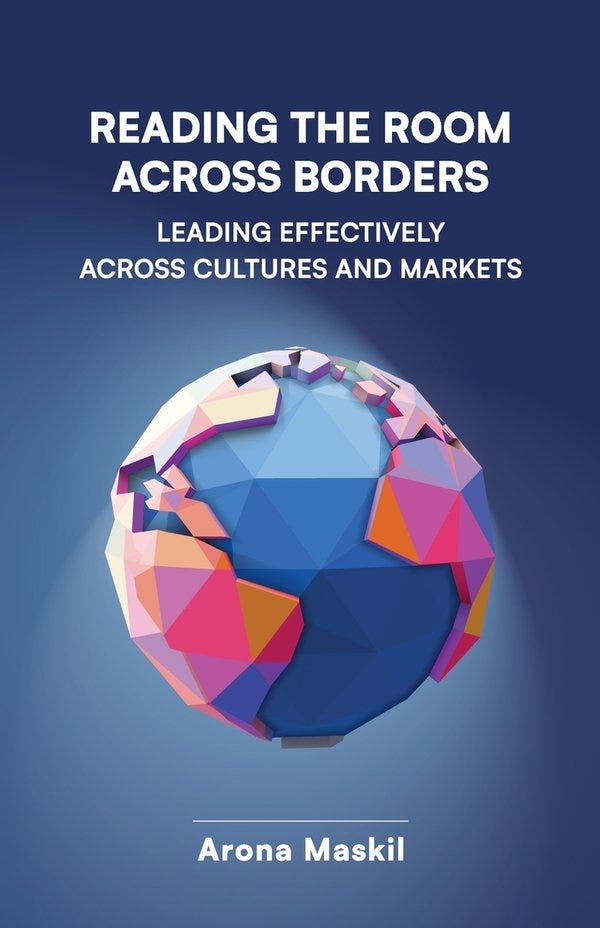
Maskil has spent more than 25 years in cross-cultural work and advises global teams through her firm, Training CQ. Her book, Reading the Room Across Borders: Leading Effectively Across Cultures and Markets, argues that cross-border deals and teams usually stumble on interpretation, not on talent or intent.
Her BRIDGE model breaks the friction into six dimensions, and we cover it in our conversation:
Building relationships
Risk-taking
Interactions
Decision-making
Group dynamics
Engagement
One part of our conversation stayed with me: how AI changes our responsibility to communicate across cultures.
The message gets better. Does the understanding?
Think about how many of us use AI now: we draft emails to colleagues or customers in another country, to soften a piece of criticism, or prepare for an international meeting.
AI results are usually polished, grammatical, and confident. But that polish can ignore what the sender may need to know about the person receiving it.
“It can translate the words, but it still cannot read the room,” she said.
Models may have access to public information or correspondence history, offering clues about previous disagreements or the recipient’s role. Even with access to correspondence, a model may lack important context. And a smooth draft makes those gaps easy to overlook, or irrelevant, once people actually meet in person and get a better sense of one another.
That idea raises a tension I want to examine: does outsourcing the wording tempt us to skip the work of understanding the relationship? It seems worth asking since more people rush to prompt a draft response in seconds without considering the broader consequence.
AI’s default voice isn’t neutral
Researchers have started measuring this. A 2024 PNAS Nexus study compared five OpenAI models’ answers with nationally representative survey data and found their values resembled those of English-speaking and Protestant European countries.
In newer models, specifying a cultural identity in the prompt improved alignment for 71%-81% of countries and territories (though not for all of them). The study tested particular models using values-survey questions; it did not assess whether AI-written workplace messages were understood as intended.
It still helps explain why fluent, apparently neutral output deserves scrutiny. Choices about directness, deference, and self-expression carry assumptions, and smooth prose makes them harder to see. The study suggested “using cultural prompting and ongoing evaluation to reduce cultural bias in the output of generative AI.”
Maskil makes the same point from the consulting side. AI “tends to treat the cultural norms as a neutral benchmark,” she said. Unless you tell it otherwise, “it’s gonna write it with your own cultural glasses.”
So AI can respond to cultural context, and the research suggests the same. The harder question is how accurately that context describes the actual situation.
The trouble with “making it Japanese”
Maskil’s own example is telling an AI “this email is for my Japanese colleague.” That gives the model additional context. But in doing so, it can also invite a generic profile potentially leaning into stereotypes.
“National culture gives us tendencies. It gives us an overview, but they’re not absolutes; they’re not rules,” she explained. And while Maskil used national comparisons, such as Israelis being direct and the Japanese being highly risk-averse, she warned against applying them to individuals.
That made sense: National patterns are where you can start, but the person across the table still needs their own unique treatment. It’s not something AI can do on its own - we still need to be ‘in the room’ to fill social cues that an algorithm can overlook, such as eye contact or posture, among others.
What stays with us
A chatbot that can answer in 27 languages is powerful. But reliance on AI to help us communicate may mean that sometimes our messages fall on deaf (or unprogrammed) ears.
AI doesn’t remove our responsibility to stay culturally aware, something even harder to do as the world settles into workflows relying on virtual screens, generated summaries, or automations. It can make it easier to forget that we still need to check the output and to confirm that we’ve been understood. A better-written message should prompt us to ask two questions: Have I been understood as intended, and have I understood the other person?
For transparency: Arona provided a copy of the book. I received no payment for this coverage and have no financial interest in its sales.


