


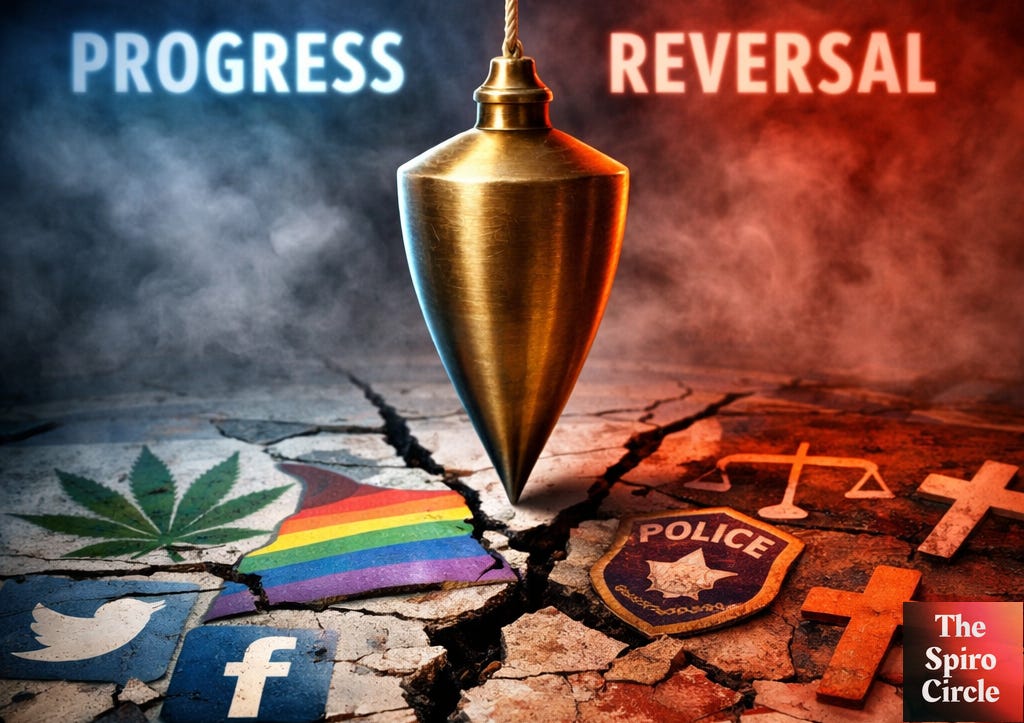
It’s been one decade since I stopped smoking weed because it made me paranoid.
Not in the extreme sense - there was never a full-blown psychosis - but in a way that made everyday life almost impossible. I would be socializing with friends happily before someone would bring out a joint. I would have some. Suddenly, all my conversations would stop - almost as if someone took my tongue. I wouldn’t get it back until the morning.
Then, I would need to leave. You see, my friends were no longer safe. I would look at them and see nothing but negativity. One would be insecure and anxious. Maybe another would be plotting some grand illegal scheme, and I would be one of his victims. The other was just sad.
Smoking weed never agreed with me, and in my mind, I assumed I was in a minority for whom the drug had a negative effect. What else could explain the cultural push to normalize, or even celebrate, it across society?
And yet I wasn’t surprised to read The New York Times calling for guardrails for marijuana, arguing that America “has recently gone too far in accepting and even promoting its use.” Approximately 18 million people in the U.S. use marijuana almost daily, and many millions more use it on a weekly or semi-frequent basis, according to Politico.
Marijuana went from criminal taboo to commercial normalcy in record time, with little serious public conversation about long-term mental health implications or commercialization at scale. And while I myself abstained from the drug long ago, it was always clear that the drug had a negative effect on those around me: across two different universities in two countries, I would come across students and young people who appeared chronically sedated or, worse, slipping into serious mental and physical decline.
This mainstream backlash against what was once lauded as ‘progress’ is just the latest swing of the cultural pendulum that spent the last few years swinging toward the far edges of social experimentation.
These experiments have started to hit their limits. As we settle into 2026, societies across continents are witnessing a quiet but firm "snap-back" as the zeitgeist retreats from the frontiers of the Obama-era 2010s.
Another such issue to hit a decline in the cultural zeitgeist is the promotion of what the media would define as “gender affirming care” among some of the most vulnerable members of society: children. Medical protocols for minors who suffered from gender dysphoria, a condition whose causes can be linked to sexual/drug abuse, autism, or internalized homophobia, went from fringe to institutional policy in a matter of years, prioritizing immediate social transition over the slow accumulation of longitudinal clinical studies.
Today, we are seeing a reversal in Europe on positions that would encourage dangerous and irreversible puberty blockers for children and adolescents under 18. Many were once in favour of gender transitions for consenting adults, but support for the trans community, and for members of the LGB community more broadly, has started to see a decline after decades of support, after seeing the horrors that the gender-affirming care inflicted on young people and their families.
Finally, and perhaps the most entertaining of the recent cultural movements, is the rejection of the Body Positivity movement. Celebrities who once promoted the “Health At Every Size” messaging plastered across the media have embraced weight loss drugs like Ozempic, showing how the narrative of body positivity is colliding with the stubborn biological realities of metabolic risk.
Other movements will join these examples as once-cultural bedrocks that will one day be viewed as exploitive or ignorant by future generations. Many called for police bodycams or to “Defund The Police” amid the George Floyd era, only to see several municipalities shifting back toward enforcement in response to public safety concerns. Earlier this month, Democrats began to question the presence of bodycams on ICE agents after an outcry from privacy advocates.
I like to think that I have, broadly, been on the ‘right side’ of these issues, and my concerns for overt drug use, irreversible medical interventions for minors, or calls for civic unrest were valid. We all do. I did not welcome or celebrate these movements, and I am relieved to see their retreat back into the fringe.
But it is easy to get seduced by the myth of progress: the false belief that humanity moves in a linear, upward trajectory toward inevitable, technological, and moral improvement. The truth is that society often makes mistakes, and I do not claim to be immune to them either.
Perhaps an obvious one, given my line of work, is the impact that technology and social media had on our children and democracy - especially in their early days. I have long argued that social media is democratizing and empowering. But perhaps I had been too blasé about growing concerns about addiction, mental health, polarization, and youth access until recently.
And then there is the impact that AI will have on all of us, and whether we are adequately prepared for the next big cultural swing coming our way. Many are saying a new reset is already on its way, leaving us very little room to breathe between each revolution.
“Something Big Is Happening”, wrote Matt Shumer on X. In many ways, he is correct. Change always comes - culturally, technically, politically - but if we’ve learnt anything in these last few years, it’s that acceleration is not progress.
We cannot take for granted the impact change has on communities, nor can we assume any correction that may follow will be gentle.