


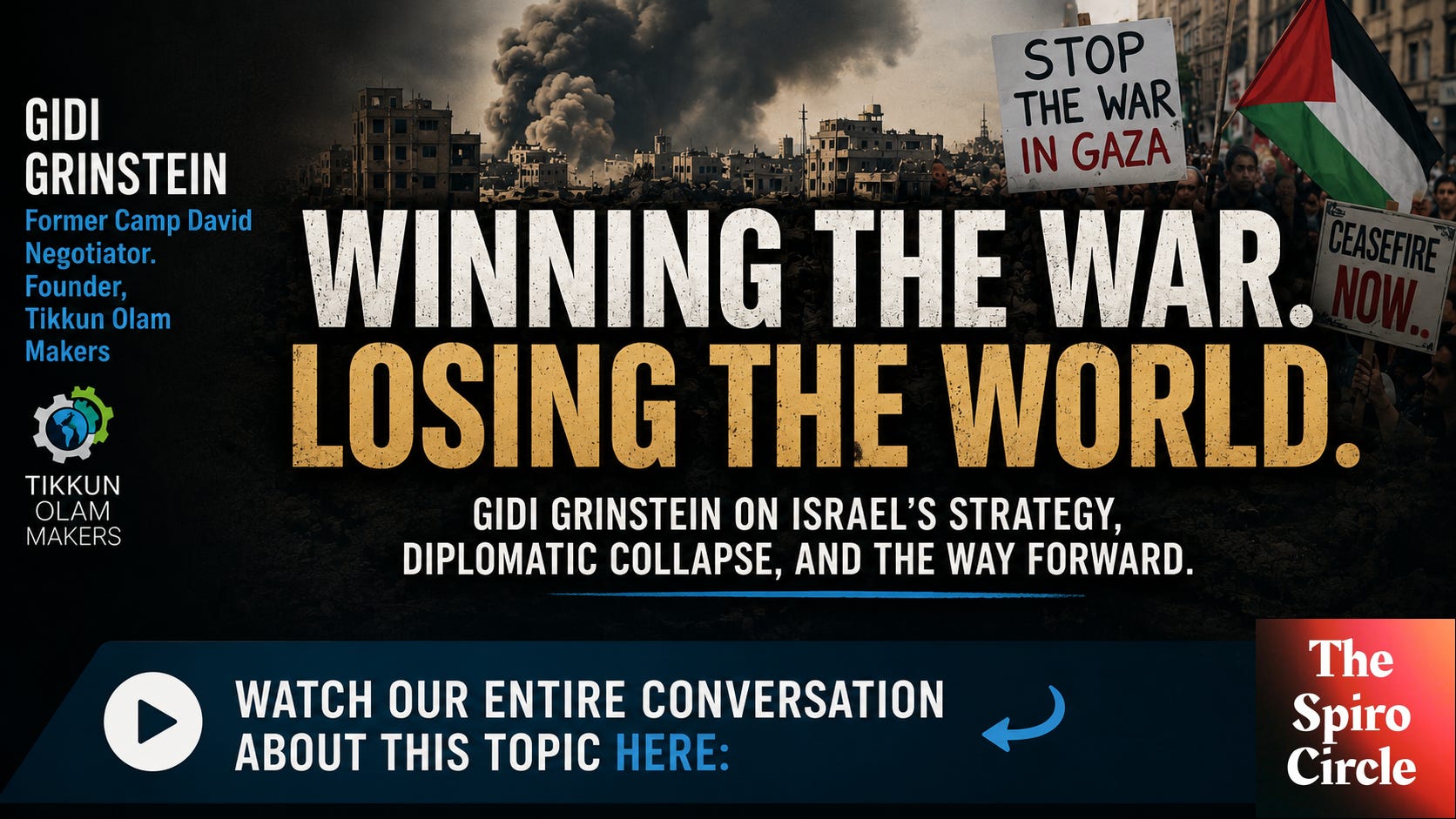
When I put it to Gidi Grinstein that Israel is winning the military war but losing the reputation battle, he didn’t flinch. “It’s a fact of life,” he said. But what followed wasn’t a media critique or a complaint about antisemitism on campuses, rather a more uncomfortable discussion about strategy, and who’s responsible for it.
Gidi was the secretary of Israel’s negotiating delegation at Camp David, the youngest person in the room at the 2000 Summit, and spent seven years inside the machinery of the peace process. In my mind, he has earned the right to say uncomfortable things on this subject. Today, he runs Tikkun Olam Makers, a global initiative co-designing affordable prosthetics with people with disabilities — including a collaborative community in Ramallah. So he is not someone who speaks abstractly about coexistence.
“In the words ‘peace process’,” he told me, “the word process is more important than peace.” His argument is that Israel has to present itself as a party seeking peace; not because it guarantees an agreement, but because without that posture, you lose the political conditions that make any agreement possible. Fighting a war while refusing to articulate what you’re fighting toward is a losing position diplomatically - even when you’re winning militarily.
I pushed back. “Support for Israel and support for the IDF were way low even in the days after October 7,” I said. “It didn’t have to go until March 2025.” Did the decisions of the subsequent months really move the needle that much, or was the collapse baked in from the very early days of the war in Gaza?
