


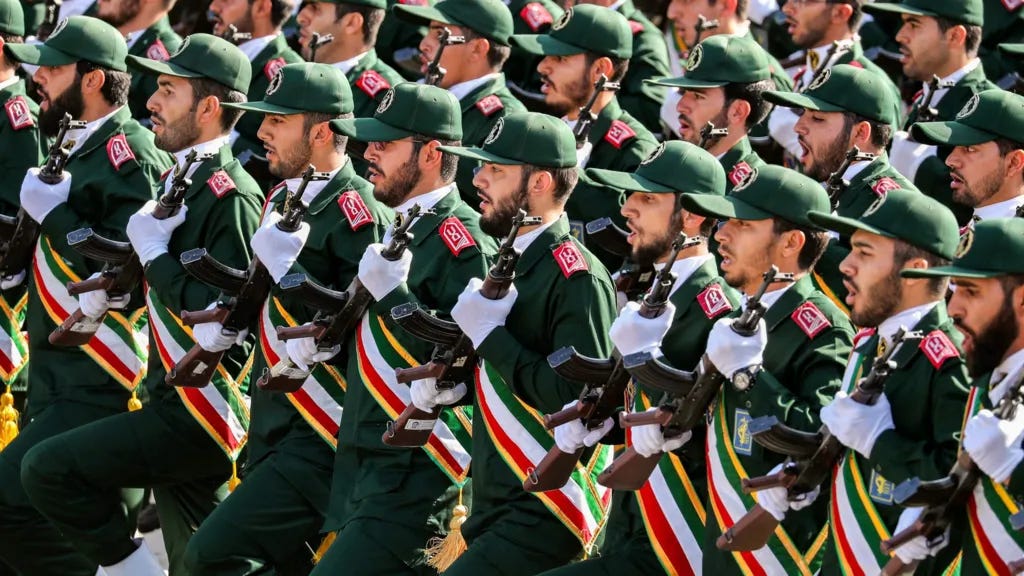
Founded by intelligence veterans Lotan Magal and Neal Tsur, Israeli startup AskIt built AI “synthetic personalities” of 122 real commanders from the Islamic Revolutionary Guard Corps. The company uses AI behavioral modeling to predict how specific individuals would act in real situations by building detailed profiles from their cumulative life experiences rather than simply prompting a generic language model.
The headline question: Who should replace Ali Khamenei?
The synthetic generals answered:
~70% (85 commanders): a military leader
<30% (36): Khamenei’s son
1 commander: a cleric
In other words: the clerical republic’s own security elite, at least behaviorally, prefers a general in charge.
Recent reporting has focused on succession uncertainty in Tehran and the growing political influence of the Guards during regional tensions and internal unrest. AskIt’s model suggests that the shift may be psychologically inevitable.
"Our 'survey' analyzes the participants' underlying mindset, not necessarily what they would say or advocate for publicly," said Dr. Tsur, Chief Technology Officer (CTO) of AskIt, who led the project. "The technology builds a behavioral profile for each commander based on their life experiences, military career, and the events that shaped them, enabling predictions of how they would respond in situations you could never ask them about directly.
"When we ran additional probing questions, we found that those who favor military leadership share a dominant concern for national security above all else. This pattern is consistent with what unfolded inside Iran during the 12-day war, when the IRGC seized control of the country's governance, and with the January protests," he added.
How The System Works
The synthetic generals database draws on open-source data, but goes deeper into each commander's cognitive patterns using methodologies from psychology and socio-physics, making it possible to understand how these commanders think even in scenarios where they could never be surveyed directly.
